
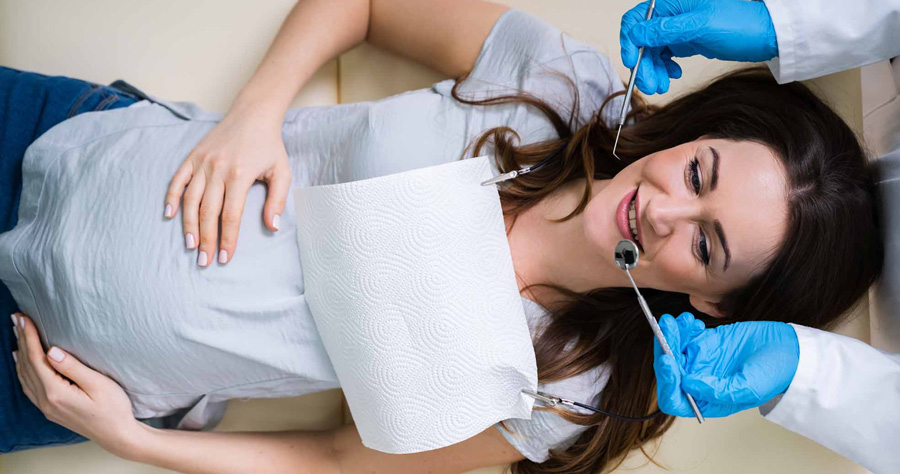
Dental Protocol for the Pregnant Women
Before Pregnancy;
- Full check up and examination.
- Set of radiographs as necessary, usually bitewings only.
- Proper Scale and Clean
If a periodontal condition is diagnosed it may be necessary to have further periodontal cleaning undertaken. This may include full mouth periodontal subgingival curettage and root planning over approximately two too four appointments, and then a check one month post treatment, to see if the condition has stabilised. I would ideally recommend seeing a hygienist for this.
If no check up before then wait until late in first trimester for full examination and clean with a set of bitewing radiographs (clinical call after appropriate discussion with patient).
General Prevention
- Full clean every three months during pregnancy, ideally just before, late first trimester, late second trimester, just before delivery. It may be necessary that more than one appointment is required to return the periodontal tissue to base line health or at least a stable condition.
- Fluoride mouthwash, no alcohol, every night before bed, or after a vomiting event. The eating or drinking of basic pH foods e.g. yoghurt, milk and cheese will also help to rebalance the oral pH. Even chewing sugar free gum will help the salivary flow.
- Clean teeth, during normal periods either 2-3 times daily, would encourage three times daily. DO NOT CLEAN STRIAGHT AFTER A VOMITING EVENT, AT LEAST 1 HR POST EVENT.
- Watch for snacking, having regular meals at least 1-2 hours apart is ideal, DO NOT CONSTANTLY SNACK.
- If feeling nauseous avoid fatty foods, highly acidic or spicy foods.
- Watch that indigestion and reflux formulations are sugar free.
- In case of gingival ulceration, warm salty water mouthwashes are appropriate, if necessary a chlorhexidine based mouthwash can be used, only use this mouthwash while symptoms persist.
- It is important that the mother to be is informed of any medical changes, e.g. if they are on anti-coagulants, so that this information can be passed onto the dental practitioner.
Appropriate Treatment Times
- Any necessary treatment should be carried out in the second trimester if possible, always watch the supine position especially late in the second trimester and third trimester, the right hip should be elevated 10-15cm. Try and find an appropriate time that suits the women, usually mornings are not appropriate, be guided by the mother to be.
- Emergency treatment can be carried out when ever necessary, there is more risk to the baby from being stressed due to pain, anxiety, or having an ongoing infection, than from having dental treatment carried out, at any stage.
- Elective procedures should be carried out at least 6 weeks post birth.
Why
By taking a preventative approach we can reduce the likelihood of issues developing down the track. It is necessary that while a mother to be is in a phase of her life where medical issues are of an upmost priority that the dentist is also involved in the initial stages. This will enable conditions to be diagnosed early and treated at the most appropriate times.
Having the ability to diagnose prior to pregnancy is the most important aspect of this protocol, if this time has past then late in the first trimester is the another appropriate time for diagnosis, so therefore treatment can be carried out in the second trimester.
The use of the Fluoridated mouthwash every night is a preventative approach, fluoride has long been associated as a preventative measure for reducing caries. Due to the reduced salivary flow, reduced pH, and increased proliferation and desquamation of the oral mucosa the pregnant women’s oral environment is primed for the increase activity of the carious bacteria.
Vomiting events also causes not only decreased oral pH, but also an increase in the direct acidic attack on the teeth. Luckily the teeth are always in a state of breakdown and repair, by adding extra fluoride across the teeth, this enables the repair mechanism to work more efficiently and also the repaired structure is stronger against further attacks. The mother to be often cleans her teeth after a vomiting event to freshen ter breath, the pregnant women needs to be informed that this is damaging, and that the use of a fluoridated mouthwash is more appropriate or chewing sugar free gum, and not to clean her teeth for at least one hour. This is due to the fact that with the erosive effect of the acid then combining tooth brushing, this increases abrasion of the tooth structure.
The feelings of nausea, cravings, and the reduced stomach capacity often lead to constant snacking and frequent meals. The mother to be has to be informed that eating should be kept at least 1-2 hours apart, and to watch what foods are eaten with the cravings. Avoiding reduced carbohydrate foods and sugary foods would be appropriate.
To control the periodontal conditions and gingival conditions during pregnancy, it is most appropriate to be able to carry out a proper clean prior to pregnancy, returning the women to a base line good health. This base health can then be easily controlled by regular three monthly cleans. Due to pregnancy exacerbating existing conditions, having the women healthy prior to pregnancy could reduce gingival and periodontal issues. This will also act to help with the link between periodontal disease and pre-term delivery and low birth weight, as it is known that the periodontal bacteria tend to take 3 months to accumulate to levels where disease activity will begin, if an appropriate clean has taken place
According to some of the articles reviewed it is around the 15-22 week marks that it is important to have good base periodontal health. So therefore this is early to mid second trimester. So even if the pregnant women has a check up and proper clean very late first trimester early second trimester even if extra appointments are required, the mother to be could have a healthy base line at the most critical period.
Condition such as mobile teeth will return to normal post birth. Pyrogenic Granuloma’s can be dealt with if necessary by removing them, but by removing the stimulator factors like plaque and calculus, caught under the swollen tissue’s this will also help to control these issues. Otherwise this condition is best left until after the birth, generally after 6 weeks.
Recommended Mouthwash;
- Oral B Tooth and Gum; Only mouthwash that I am aware of that is alcohol free and contains fluoride.
- Any product with chlorhexidine in it can be used when there is acute issue with the gums, e.g. Savacol.